

Interesting Facts About Mathematics and Patterns
Fact · 10 facts — swipe through each one · Apr 4, 6:28 PM

The Fibonacci sequence appears in many biological settings, such as the arrangement of leaves on a stem, the branching of trees, and the fruitlets of a pineapple.
A magic square is a grid of numbers where every row, column, and diagonal add up to the same total, and the oldest known example dates back to ancient China.
The number pi (π) is not only irrational but also transcendental, meaning it cannot be the root of any non-zero polynomial equation with rational coefficients.
In a group of just 23 people, there's a more than 50% chance that two people share the same birthday due to the birthday paradox.
Benford's Law states that in many naturally occurring collections of numbers, the leading digit is likely to be small, with the digit 1 appearing about 30% of the time.
Pascal's Triangle is not only a tool for expanding binomials but also displays patterns related to the Fibonacci sequence, prime numbers, and more.
The Mandelbrot Set, a famous fractal, is infinitely complex, and its boundary reveals self-similar patterns no matter how deeply you zoom in.
The sum of the numbers from 1 to 100 can be quickly calculated using the formula n(n + 1)/2, giving a total of 5050.
A circle can be divided into a maximum of 31 regions with only six straight line cuts.
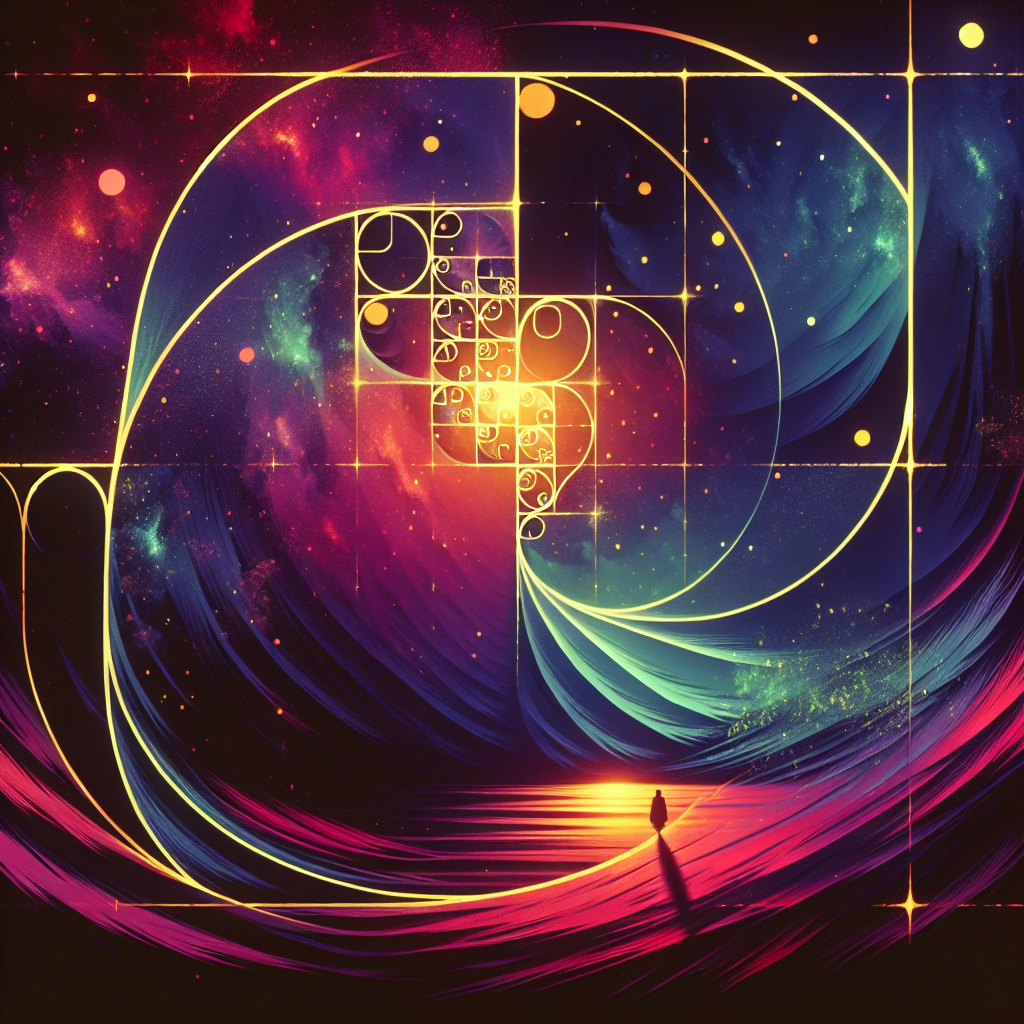
The golden ratio, approximately 1.618, is believed to be aesthetically pleasing and appears in art, architecture, and nature, from the Parthenon to the growth patterns of shells.
Interesting Facts About Mathematics and Patterns
Fact · 10 facts — swipe through each one · Apr 3, 10:17 PM

The number zero was independently invented in multiple cultures, including by the Mayans and the ancient Indians.
Pi, the ratio of a circle's circumference to its diameter, has been calculated to over 31 trillion digits without repeating.
In mathematics, a palindrome is a number that reads the same forwards and backwards, such as 12321.
The Fibonacci sequence is closely related to the golden ratio, with the ratio of successive Fibonacci numbers approaching the golden ratio as they increase.
Euler's identity, often cited as a beautiful equation, is e^(iπ) + 1 = 0, linking five fundamental mathematical constants.
A magic square is a grid of numbers where the sums of numbers in each row, column, and diagonal are equal, and some have been found dating back thousands of years.
The game of chess has an estimated 10^120 possible moves, more than the number of atoms in the visible universe.
Every odd perfect number, if it exists, is greater than 10^1500, and its existence remains unproven.
The largest known prime number, as of 2021, has over 24 million digits and was discovered using distributed computing.
Fractals are infinitely complex patterns that are self-similar across different scales, often found in nature in forms like snowflakes and coastlines.