
Echoes of the Forgotten Diary
Story · 3 min read · Jun 19, 10:28 AM
The wind whistled through the cracks of the old cottage, carrying with it the whispers of long-lost voices. Emma found herself standing in the attic, outlined by the dim glow of a single bulb, as she rummaged through boxes of dusty memories left by previous occupants. She was drawn to an ornate wooden box, tucked away in the corner like a hidden secret. The box creaked open, revealing a leather-bound diary. Its pages were yellowed with age, ink smudged yet legible. As her fingertips brushed over the cover, a chill swept through her, as though she had stirred something that had lain dormant for years. Flipping through the pages, she discovered entries penned by a young girl named Clara, dating back to the 1920s. Clara wrote of dreams, aspirations, and peculiar experiences with an enigmatic voice that guided her. Each entry pulled Emma deeper into a tapestry woven with mysteries and a haunting familiarity she couldn’t shake. One night, Emma dreamt she was walking through a lush garden, the air fragrant with blooming roses. A soft voice called her name, gentle yet insistent. She turned, heart pounding, to find a figure standing under an archway of ivy. It was Clara, her presence both ethereal and vivid. “Emma,” Clara spoke, her voice like a melody from a forgotten song, “You must help me find what was lost.” The scene shifted, and Emma found herself in the attic again, now vibrant and alive with colors of a bygone era. The diary now lay open, words shimmering like stars in the night. Clara’s voice echoed, guiding her to a specific passage. “When the heart listens, the past reveals its truth,” it read. Emma awoke with a start, the morning light filtering through the attic window. She hurried to the diary, her heart racing. The words from her dream were there, inscribed on the pages. Confusion and curiosity collided within her as she pondered the link between the diary and her reality. Driven by an unyielding urge, she spent days searching for missing pieces of Clara's life, piecing together clues from old letters and photographs. Each discovery felt like a thread connecting her to a time long vanished. One evening, as the sun dipped below the horizon, Emma uncovered a letter tucked within the diary’s back cover. It was addressed to her, written in Clara’s unmistakable hand. “Thank you, Emma,” it read. “For listening and for remembering.” Emma's breath caught in her throat, the letter a tangible proof of the bridge between past and present. Yet, as she looked around, the diary and the letter faded like the mist of a morning dream, leaving her with just a lingering sense of fulfillment and a whisper of gratitude. The morning after, Emma awoke with a sense of serene clarity, the remnants of the dream a fleeting yet profound experience. As she stood by the attic window, watching the world bathed in dawn light, she felt the weight of the past lift, leaving her heart light and her soul enriched by the echoes of a voice from the past.


Surprising Facts About Mythology and Folklore
Fact · 9 facts — swipe through each one · Jun 7, 2:31 AM
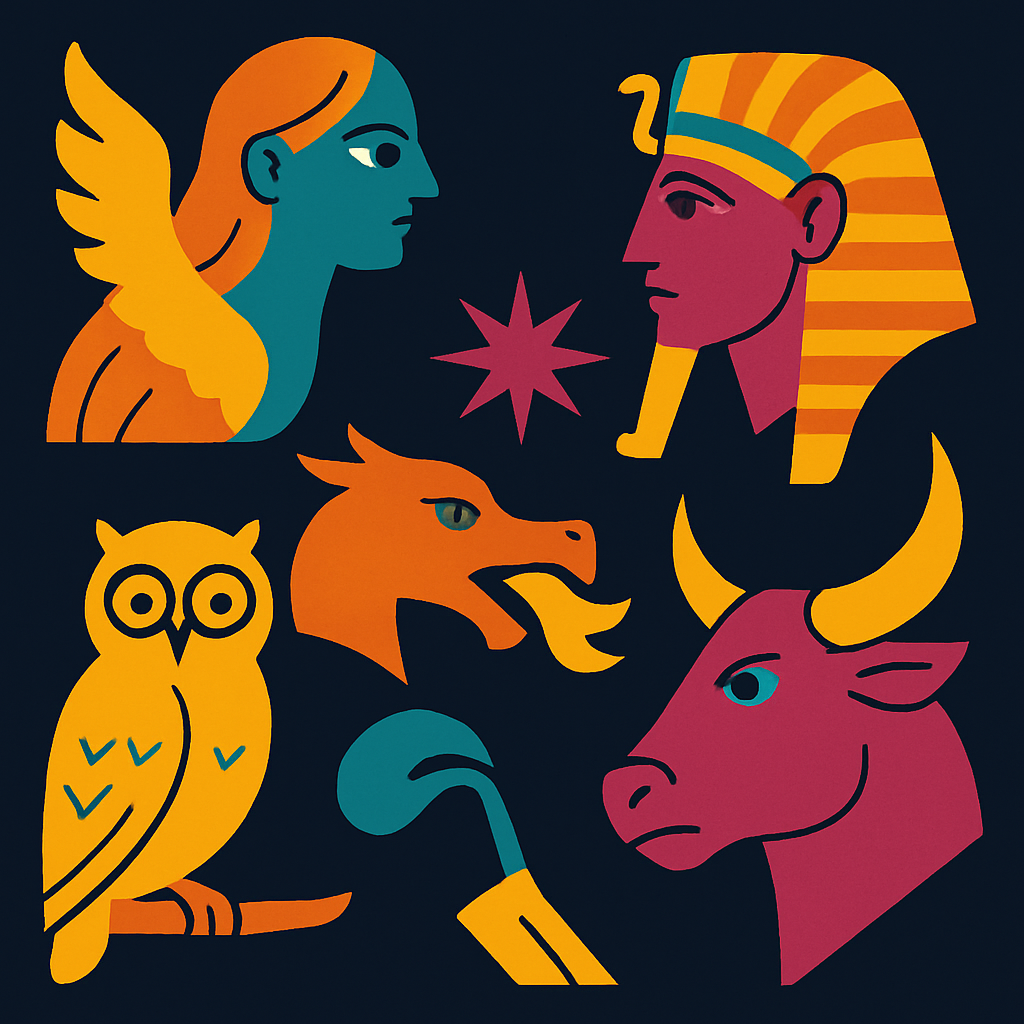
In Norse mythology, the world is thought to rest on the branches of a giant ash tree called Yggdrasil.
The Japanese folklore creature Kappa is said to have a small pool of water on its head that gives it strength, and losing it makes it powerless.
In Greek mythology, the hero Bellerophon tamed and rode the winged horse Pegasus, not Perseus as is often mistakenly believed.
According to Irish folklore, banshees are female spirits who wail to foretell the death of a family member.
In Hindu mythology, the universe is cyclically created and destroyed every 4.32 billion years, a time span known as a 'Kalpa'.
Native American folklore often features the trickster figure Coyote, who is both a hero and a mischievous troublemaker.
The Finnish epic 'Kalevala' inspired J.R.R. Tolkien in creating languages and mythologies for 'The Lord of the Rings'.
In Chinese mythology, dragons are considered benevolent creatures associated with water and bringers of good luck and rain.
The concept of a vampire-like creature appears in ancient mythology across cultures, including Greek, Babylonian, and Indian lore.
Surprising Facts About Secret Societies and Hidden Codes
Fact · 8 facts — swipe through each one · Jun 5, 7:04 PM
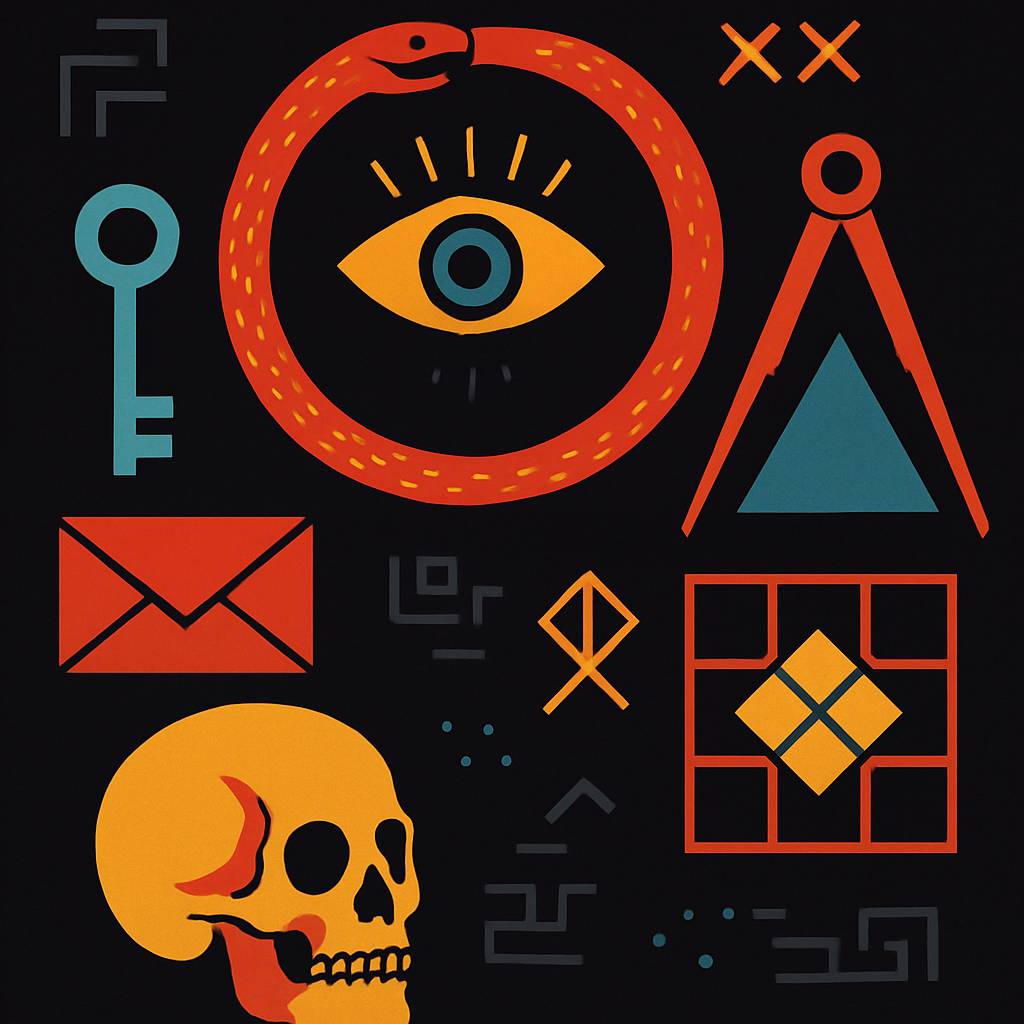
The Freemasons, one of the most well-known secret societies, have symbols like the square and compass that represent moral lessons.
The Pythagorean Brotherhood, an ancient Greek secret society, used the pentagram as a secret symbol for health and knowledge.
The Knights Templar were rumored to have used coded messages to protect the locations of their hidden treasures.
The Beale ciphers, a set of three encrypted messages, allegedly reveal the location of a buried treasure worth millions, but only one cipher has been partially solved.
The Rosicrucians, a mystical secret society, were known for their use of alchemical symbols and hidden codes to convey spiritual teachings.
The Voynich Manuscript, written in an unknown language, has baffled cryptologists for centuries and is believed to be a coded document by a secret society.
The Illuminati, originally a Bavarian secret society, is often associated with using cryptic symbols and codes for clandestine communication.
The Carbonari, an Italian secret society, used a complex system of hand signals and verbal codes to maintain secrecy during their meetings.
Interesting Facts About Film and Cinema
Fact · 9 facts — swipe through each one · Jun 5, 10:32 AM

The first feature-length animated film is 'El Apóstol,' made in 1917 by an Argentine director.
Alfred Hitchcock never won an Oscar for Best Director despite his iconic career in filmmaking.
The original cut of 'Toy Story 2' was nearly lost due to a command accidentally deleting most of the files, but a backup at an employee's home saved the film.
The Oscar statuette is made of gold-plated bronze and stands 13.5 inches tall.
The longest film ever made is 'Logistics,' a Swedish experimental art film that runs for 857 hours.
James Cameron's 'Avatar' was in development for nearly 15 years before its release in 2009.
'Gone with the Wind' adjusted for inflation is still the highest-grossing film of all time.
The Wilhelm scream, a stock sound effect, has been used in over 400 films and television episodes since 1951.
The iconic 'shower scene' in 'Psycho' was shot over seven days using 77 different camera angles.
Intriguing Coincidences and Luck Facts
Fact · 7 facts — swipe through each one · Jun 5, 1:57 AM

In 1974, a man named Alexander Gerbovich was saved by a man who previously saved him from drowning in 1956, despite the rescuer having moved to a different city.
In 2002, a Finnish man won the lottery twice in a row, with the odds of this happening estimated at one in 25 billion.
A meteor once crashed into a woman's home in Alabama in 1954, making her the only person confirmed to have been directly impacted by a meteorite.
In 2010, two identical twin brothers in Finland died on the same day in separate accidents, just hours apart and by the same road.
Mark Twain was born in 1835, the year Haley's Comet appeared, and he also died in 1910, the year the comet appeared again, which he predicted would happen.
Lightning has struck the same place in Poland three times, despite the location being relatively small and not elevated.
The lives of John Adams and Thomas Jefferson, the second and third U.S. Presidents respectively, ended on the exact same day: July 4, 1826, the 50th anniversary of the Declaration of Independence.
Interesting Facts About Migration and Travel History
Fact · 7 facts — swipe through each one · Jun 4, 3:29 PM

The ancient Polynesians navigated thousands of miles across the Pacific Ocean using only the stars, wind, and sea currents long before modern navigation tools.
In the 19th century, the Great Emigration saw over 400,000 pioneers travel the Oregon Trail, one of the longest overland trails in American history.
Between 1820 and 1930, over 4.5 million Irish people emigrated to the United States, largely due to the Great Famine.
The Silk Road was a network of trade routes that connected the East and West for over 1,500 years, facilitating not just trade but cultural exchanges.
The 'Grand Tour' in the 17th and 18th centuries was a traditional trip through Europe undertaken by mainly upper-class European young men to finish their education.
The Trans-Siberian Railway, completed in 1916, is the longest railway in the world, stretching over 9,200 kilometers from Moscow to Vladivostok.
During the Great Migration (1916 to 1970), over six million African Americans moved from the rural Southern United States to urban areas in the North and West.
Interesting Facts About Fashion and Clothing History
Fact · 9 facts — swipe through each one · Jun 4, 12:03 PM
High heels were originally worn by men in the 10th century to help them ride horses more effectively.
The iconic little black dress was popularized by Coco Chanel in the 1920s as a symbol of timeless elegance.
During the Middle Ages, clothing colors and styles were strictly regulated by sumptuary laws to denote social rank.
In ancient Rome, only emperors were allowed to wear purple, a dye made from Mediterranean sea snails.
The zipper, now a ubiquitous fastener, was not widely used in clothing until the 1930s.
The first fashion magazine was created in France in the late 17th century and was called 'Le Mercure Galant.'
The term 'jeans' comes from 'Genes,' the French word for Genoa, Italy, where denim trousers were made for sailors.
In Victorian times, mourning clothes were so crucial that they were rented for those who couldn't afford them.
The modern necktie traces its origins back to Croatian mercenaries who wore cloth around their necks in the 17th century.
Surprising Facts About Crime and Law
Fact · 7 facts — swipe through each one · Jun 3, 9:48 PM
In some parts of the world, impersonating a criminal is a crime itself, considered just as serious as the original offense.
It's legally possible in several countries to sue a ghost, provided the case involves potential harm or distress to people.
In the 19th century, attending a duel was considered a crime in many regions, whether or not you participated.
In New Zealand, it is illegal to fly with both a chicken and a parachute, highlighting unique combinations in safety laws.
In ancient Greece, it was a crime to steal another person's ideas, marking some of the first intellectual property laws.
In the U.S., there are still laws on the books that make it illegal to duel, a holdover from historical enforcement.
The term 'jaywalking' originated from a time when 'jay' was slang for someone stupid or ignorant, highlighting class divides.
Surprising Facts About Architecture and Engineering
Fact · 8 facts — swipe through each one · Jun 3, 6:26 PM

The Great Wall of China is not a single continuous wall but a series of walls and fortifications built by various dynasties.
The Eiffel Tower can be 15 cm taller during the summer due to thermal expansion of its iron structure.
Construction of the Sagrada Familia in Barcelona, started in 1882, is still ongoing with an estimated completion date around 2026.
The world's largest building by volume is the Boeing Everett Factory in Washington, which is large enough to fit 75 football fields.
The ancient Romans were known to have used concrete, and their formula included volcanic ash, making it remarkably durable.
The first recorded use of a steel-reinforced concrete building was in 1854, marking a significant innovation in construction methods.
The Burj Khalifa in Dubai, standing at 828 meters, uses a special chemical formula in its glass to minimize heat absorption from the sun.
The Leaning Tower of Pisa has been stabilized over the years with engineering techniques, including soil extraction and the addition of lead counterweights.
Surprising Time and Calendar Facts
Fact · 8 facts — swipe through each one · Jun 3, 7:24 AM

The ancient Romans used a calendar with only ten months, excluding January and February, until 713 BC.
A 'leap second' is occasionally added to Coordinated Universal Time to account for Earth's slowing rotation.
In Samoa, Friday, December 30, 2011, did not exist when the nation skipped a day to align its time zone with major trading partners.
The modern Gregorian calendar was first instituted by Pope Gregory XIII in 1582 to correct the Julian calendar's inaccuracies.
There is a Mars calendar, which is used to track time on the surface of Mars, where a day, called a 'sol,' is about 24 hours and 39 minutes long.
The word 'hour' comes from the ancient Egyptian word 'hōra,' a unit of time used to measure the 12 hours of daylight.
Despite February 29th being a rare occurrence, babies born on this day can celebrate their actual birthdays only once every four years, known as 'leaplings'.
The longest year in history was 46 BC, with 445 days, due to the insertion of months to realign the Roman calendar with the seasons.
Interesting Facts About Games and Play
Fact · 7 facts — swipe through each one · Jun 2, 5:44 PM

The longest Monopoly game ever played lasted more than 70 days.
Chess is thought to be over 1,500 years old, originating from a game called Chaturanga in India.
The world record for the longest time playing a video game is over 35 hours on FIFA 22.
Scrabble was originally called Lexiko and was created during the Great Depression.
The Rubik's Cube, invented in 1974, has over 43 quintillion possible configurations.
The game of tag is said to date back to the Roman Empire, where it was played by soldiers.
Mario, from Nintendo's popular games, was initially called Jumpman when he debuted in 1981.
Surprising Facts About Sports and Athleticism
Fact · 7 facts — swipe through each one · Jun 2, 6:54 AM

The longest recorded tennis match lasted 11 hours and 5 minutes over three days at Wimbledon in 2010.
Olympic gold medals are actually made mostly of silver, containing only about 6 grams of gold.
The Tour de France is the world's longest bicycle race, covering around 3,500 kilometers over 23 days.
The fastest recorded tennis serve is 263 km/h (163.4 mph) by Australian player Sam Groth in 2012.
Basketball was invented by a Canadian physical education instructor, James Naismith, in 1891 using peach baskets as hoops.
The first modern Olympic Games, held in 1896, featured only 13 countries and 280 athletes competing.
In 2019, Eliud Kipchoge became the first person to run a marathon in under two hours, though it was not an official record due to assisted conditions.
Surprising Art and Creativity Facts
Fact · 8 facts — swipe through each one · May 31, 5:00 PM

Leonardo da Vinci could write with one hand while drawing with the other at the same time.
Vincent van Gogh only sold one painting during his lifetime, and it was to a friend.
The Mona Lisa has no eyebrows because it was the fashion in Renaissance Florence to shave them off.
Claude Monet, a founder of French Impressionism, used to destroy his own paintings if he was dissatisfied with them.
The color wheel, still used by artists today, was invented by Sir Isaac Newton in 1704.
The modern concept of 'artistic genius' emerged during the Renaissance, shifting the perception of artists from craftsmen to creative visionaries.
Jackson Pollock used to lay his canvases on the floor to drip paint onto them, a technique known as action painting.
Michelangelo carved the David from a block of marble that another sculptor had already started and deemed irreparable.
Surprising Success Stories from Famous Failures
Fact · 7 facts — swipe through each one · May 31, 11:18 AM

Walt Disney was fired from a newspaper for lacking imagination before creating the iconic Disney empire.
Oprah Winfrey was demoted from her job as a news anchor, which led her to become the successful talk show host she is today.
Steven Spielberg was rejected from the University of Southern California's film school three times but went on to become a legendary filmmaker.
J.K. Rowling's manuscript for Harry Potter was rejected by 12 publishers before it became a worldwide phenomenon.
Thomas Edison made 1,000 unsuccessful attempts at inventing the light bulb before achieving success.
The Beatles were rejected by several record labels, including Decca Records, before becoming one of the most influential bands in history.
Colonel Sanders was turned down 1,009 times before successfully selling his Kentucky Fried Chicken recipe.
Surprising Facts About Technology and Invention
Fact · 7 facts — swipe through each one · May 31, 8:05 AM

The first 3D printer was created in 1984 by Charles Hull, kickstarting the future of on-demand manufacturing.
The term 'robot' was first used in a 1920 play by Czech writer Karel Čapek called 'R.U.R.', which stands for Rossum's Universal Robots.
The first email was sent by Ray Tomlinson in 1971, who also decided to use the '@' symbol to separate the username from the computer name.
The world's first website, info.cern.ch, was created in 1991 by Tim Berners-Lee, who also invented the World Wide Web.
In 1969, the first message sent over the ARPANET, the predecessor to the internet, was 'LO' because the system crashed while typing 'LOGIN'.
The first smartphone, IBM's Simon Personal Communicator, was introduced in 1992 and featured a touchscreen and apps.
Bluetooth technology is named after a 10th-century Scandinavian king, Harald 'Bluetooth' Gormsson, who united Denmark and Norway.
Surprising Facts About History and Ancient Civilizations
Fact · 8 facts — swipe through each one · May 31, 6:39 AM
The Great Pyramid of Giza was the tallest man-made structure in the world for over 3,800 years.
Ancient Romans used urine as a mouthwash for its ammonia content, which helped to clean their teeth.
Cleopatra, the last active ruler of the Ptolemaic Kingdom of Egypt, was actually closer in time to the first moon landing than to the construction of the pyramids.
The city of Babylon was once considered one of the largest cities in the world, boasting impressive infrastructure like the famous Hanging Gardens.
The ancient city of Pompeii was preserved under volcanic ash for centuries, providing an unparalleled snapshot of Roman life.
The Indus Valley Civilization, known for its advanced urban planning, existed around 2500 BCE, showcasing complex drainage systems and architectural innovations.
The Library of Alexandria, one of the most significant libraries of the ancient world, was believed to house up to 700,000 scrolls at its peak.
Stonehenge was constructed over several phases spanning 1,500 years, with its earliest forms dating back to 3000 BCE.
The Last Photograph
Story · 3 min read · May 31, 6:22 AM
At the edge of the small town, nestled between whispering pines, stood the old Greenwood house, a weathered relic of another era. Sam, a diligent history student with a passion for local lore, found himself drawn to its creaking floors and faded wallpaper like a moth to a flame. He wasn't alone; whispers in the community swirled about the mysterious last photograph taken there. Curiosity compelled Sam to explore. The house had been abandoned for decades, yet the aura of untold stories lingered in the air, thick as the dust coating the furniture. One evening, with dusk painting the sky in hues of orange and purple, Sam pushed open the aged wooden door and stepped inside. Inside, the house was a time capsule. Sam cautiously moved through the rooms, each creak of the floorboards echoing his heartbeat. In the dim light, he could make out a tidily arranged living room, preserved as though the family had just stepped out. On a small, round table by the window stood a framed photograph—Sam's objective. The photograph was black and white, depicting a family of four. Parents, a smiling boy, and a girl holding a stuffed rabbit. All seemed ordinary, yet something about the children’s gazes held an unnerving quality, as if they knew something they couldn't express. Sam snapped a photo of the photo, albeit reluctantly. He had hoped to find a diary or letters explaining the family's sudden departure, but those were conspicuously absent. Disappointment mingled with intrigue as he left the house, convinced he had missed something. Back at the dorm, Sam studied the photograph with a magnifying glass, hoping to uncover hidden details. That's when he noticed it—something peculiar in the reflection of a window behind the family. It was a figure, blurry but unmistakably present, standing just outside the frame. Excited and apprehensive, Sam spent the next week scouring archives, interviewing local historians, and piecing together the Greenwood family’s story. His research led him to an elderly former neighbor who spoke of the house's history in hushed tones, hinting at peculiar events but divulging little. Sam decided to return to the Greenwood house one misty morning, determined to decipher the mystery behind the photograph. As he entered the living room, an unexplainable chill swept over him. The room felt different; the air heavier. His eyes fell upon the photograph once more, but something was amiss. The frame lay open, the photograph missing. Unease crept up his spine as he glanced around, half expecting to see the ghostly figure from the photo. Just then, Sam's phone buzzed with a notification. It was an email from the local library, responding to his inquiry about the Greenwoods. He scanned the email quickly, his eyes widening as they reached the last line. The last photograph was never taken in the Greenwood house. It was a clever forgery, created by an artist who lived in town years later, embedding an illusion inside as a commentary on memory and perception. Sam paused, the realization dawning on him. The photograph wasn’t a mystery to be solved but a trick played on those seeking answers, a reminder of how easily our eyes can be deceived. With a wry smile, Sam walked out of the house, no longer searching for ghosts but appreciating the art of storytelling—and the stories we choose to believe.
Surprising Facts About Money and Economics
Fact · 9 facts — swipe through each one · May 30, 1:42 PM

The first paper money was created in China during the Tang Dynasty in the 7th century.
The U.S. Bureau of Engraving and Printing produces more than 3 billion $1 bills each year.
In Canada's currency, the $2 coin, affectionately known as the 'toonie,' features a polar bear on one side.
The largest denomination of U.S. currency ever printed was the $100,000 bill, which was used only for transactions between Federal Reserve Banks.
More than 90% of the world's currency exists only on computers and not in physical form.
Vending machines in Japan sell everything from socks to umbrellas, contributing to a more than $60 billion industry.
In Zimbabwe, hyperinflation led to the printing of a $100 trillion note, which later became a collector's item when the currency was abandoned.
The word 'salary' comes from the Latin word 'salarium,' which means payment in salt, a valuable commodity in ancient times.
Monopoly, the world's most popular board game about real estate and finance, has been translated into 37 languages.
Surprising Turning Points in History
Fact · 7 facts — swipe through each one · May 30, 10:31 AM
The eruption of Mount Vesuvius in 79 AD, which buried Pompeii, led to advances in geological studies and disaster preparedness.
The unexpected landing of the Mayflower in 1620 at Plymouth Rock was due to navigational errors, altering the course of American settlement.
The invention of the printing press in the 15th century by Johannes Gutenberg led to a significant spread of knowledge and literacy, fueling the Renaissance era.
The failure of the potato crop in Ireland during the 1840s famine led to a massive wave of emigration, significantly impacting American demographics.
The 1906 San Francisco earthquake prompted major changes in building codes and urban planning across the United States.
The eruption of Krakatoa in 1883 was so powerful that it altered global climate patterns and led to vivid sunsets worldwide for years.
The creation of the Suez Canal in 1869 drastically shortened the maritime route between Europe and Asia, transforming global trade.

Interesting Facts About Secret Societies and Hidden Codes
Fact · 8 facts — swipe through each one · Apr 25, 12:52 PM
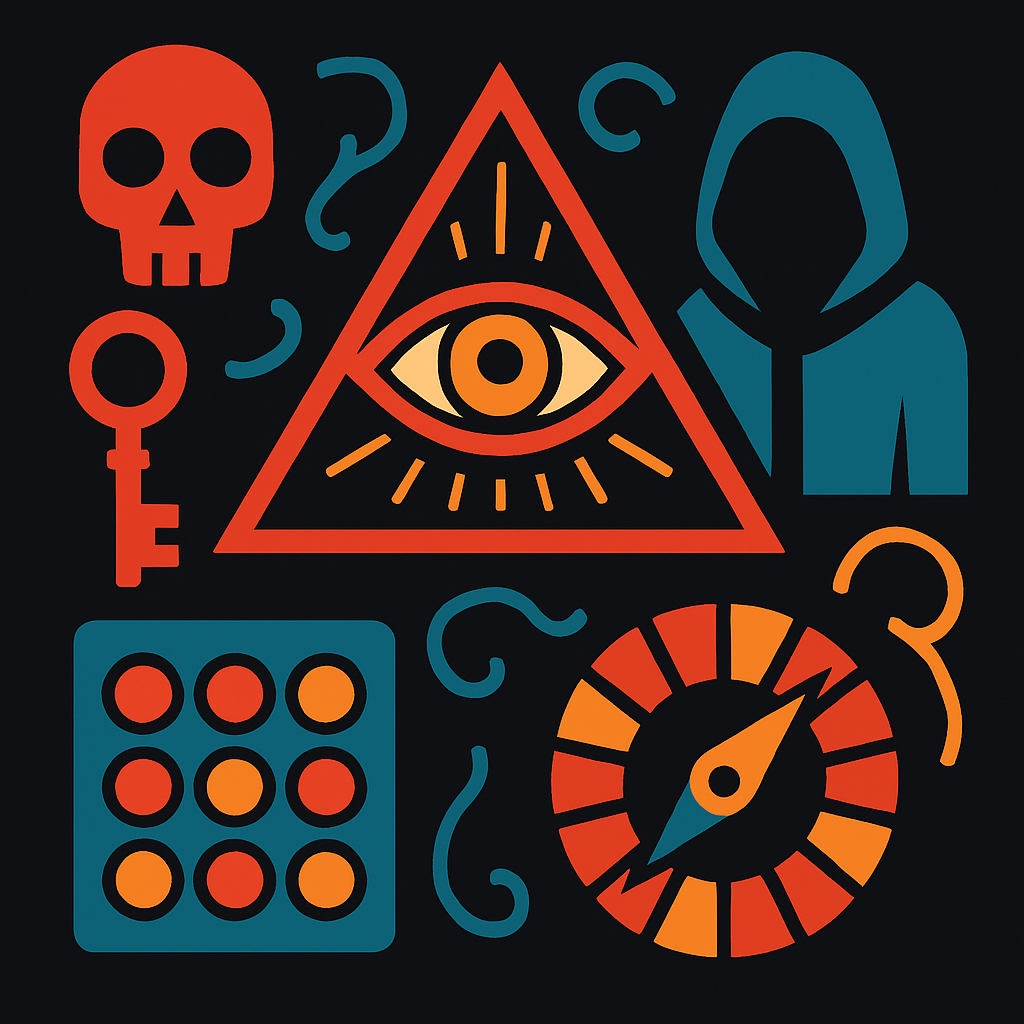
The Pigpen Cipher, used by the Freemasons, replaces letters with simple symbols derived from a grid.
The famous book 'The Secret History of the Court of Berlin' was a coded attack on Frederick the Great, published anonymously in 1789.
The Rosicrucians, a secret society, were said to possess esoteric truths as far back as the early 17th century.
The Voynich Manuscript, filled with mysterious illustrations and an undeciphered script, has puzzled cryptographers for centuries.
The Illuminati, originally a secret society in 18th-century Bavaria, aimed to promote Enlightenment ideals through clandestine reform.
The Beale Ciphers detail a hidden treasure in Virginia, though only one of the three ciphers has been successfully decoded.
A code used by Mary, Queen of Scots, during her imprisonment was eventually deciphered, leading to her execution for treason.
The mysterious Order of the Golden Dawn, founded in the late 19th century, influenced many modern occult movements.
Surprising Film and Cinema Facts
Fact · 8 facts — swipe through each one · Apr 14, 2:58 PM

The first feature-length film ever made is the 1906 Australian movie 'The Story of the Kelly Gang,' which runs for over an hour.
Charlie Chaplin once entered a Charlie Chaplin look-alike contest and came in third place.
The iconic roar of the T-Rex in 'Jurassic Park' was created by blending sounds from a baby elephant, a tiger, and an alligator.
The snow in 'The Wizard of Oz' was actually made from asbestos, a material now known to be dangerous.
The longest-running film in cinematic history is 'The Rocky Horror Picture Show,' which has been in limited release since 1975.
Pixar’s 'Monsters, Inc.' was the first animated film to have a full computer-generated fur simulation for the character Sulley.
Alfred Hitchcock never won an Oscar for Best Director, despite being one of the most influential filmmakers in history.
The famous shower scene in 'Psycho' was initially 45 seconds long and consisted of 78 different camera angles.
Surprising Coincidences and Luck Facts
Fact · 7 facts — swipe through each one · Apr 14, 12:48 AM

In 1954, a man was struck by a meteorite while in his living room, making him the only confirmed person to ever be directly hit by one.
In 2004, a South African woman won the lottery twice in one day, a likelihood of around one in 17 trillion.
The odds of shuffling a deck of cards into perfect sequential order are approximately one in 10 to the power of 68.
In 1965, twins in Ohio both died of heart attacks on the same day despite living 40 miles apart.
In 1895, the only collision involving two cars in the state of Ohio happened because the roads were mostly empty, making the crash a bizarre coincidence.
In 1920, three strangers on a train in Peru discovered they were all named Juan Valdez, an improbable coincidence given the name's rarity in the region.
Astronaut Neil Armstrong and aviator Charles Lindbergh were born 59 years apart to the day, both pioneers in their respective fields.

Surprising Migration and Travel History Facts
Fact · 8 facts — swipe through each one · Apr 12, 8:53 AM

The first known migration of Homo sapiens out of Africa occurred approximately 60,000 years ago.
The Great Migration in the United States during the 20th century saw over six million African Americans relocate from the rural South to urban areas in the North and West.
The Australian emu once migrated across the continent, covering thousands of kilometers in search of food and water.
In the 19th century, nearly 30 million Europeans migrated to the United States, contributing to the country's rapid population growth.
The Monarch butterfly is the only insect known to make a two-way migration similar to birds, traveling thousands of miles from North America to central Mexico each year.
The Silk Road was not a single route but a network of trade paths that connected China with the Mediterranean, facilitating cultural exchange over 1,500 years ago.
Between 1845 and 1852, the Irish Potato Famine resulted in the emigration of around one million people, drastically transforming demographics in the United States and beyond.
The Trans-Siberian Railway, spanning over 9,000 kilometers, is the longest railway line in the world and was completed in 1916, significantly influencing migration patterns within Russia.
Surprising Facts About Fashion and Clothing History
Fact · 7 facts — swipe through each one · Apr 11, 6:20 PM

Heels were originally designed for men in the 10th century to help Persian cavalry keep their feet in stirrups.
During the Renaissance, it was fashionable for European nobility to wear clothing made from arsenic-laced fabric which gave a green hue.
The earliest known sewing needles were made from bone and date back to around 19,000 BC.
The wearing of wigs became popular in Europe in the 17th century after King Louis XIII of France began wearing one to hide his premature balding.
In the 19th century, dresses worn by women were so wide that they sometimes had to turn sideways to pass through doors.
The color purple was once so expensive to produce that it was reserved for royalty and the elite.
The bikini was so scandalous when first introduced in 1946 that no Parisian models would wear it, and the inventor had to hire a dancer from a casino.
Surprising Facts About Crime and Law
Fact · 8 facts — swipe through each one · Apr 9, 1:04 AM

In ancient Rome, crossing a bridge without paying the toll was considered a crime and could result in fines.
In the United States, more than 300,000 books are housed in prison libraries across the country.
The concept of a jury trial dates back to Ancient Greece, where juries could be as large as 500 members.
In Victorian England, stealing a handkerchief was considered a serious crime and could result in transportation to Australia.
The word 'penitentiary' comes from the Latin word for 'repent,' emphasizing the idea of reform rather than punishment.
In the Middle Ages, animal trials were held in Europe where animals could be tried and sometimes executed for crimes.
The first recorded bank robbery in the United States took place in 1798 in Philadelphia, and the amount stolen was $162,821.
Pickpocketing was such a problem in 19th century London that public hangings of pickpockets were sometimes used as a deterrent.
Surprising Facts About Time and Calendars
Fact · 8 facts — swipe through each one · Apr 7, 7:22 PM

February 30th actually existed twice in Sweden due to a calendar adjustment in 1712.
A day on Venus is longer than its year, taking 243 Earth days to rotate once on its axis.
The word 'month' comes from 'moonth,' reflecting the Moon's phases.
Leap years are not every four years; century years must be divisible by 400 to be leap years.
The Gregorian calendar, introduced in 1582, skipped 10 days to realign with the seasons.
The ancient Egyptians were the first to create a 365-day calendar.
In the 18th century, Britain adopted the Gregorian calendar by skipping 11 days in September 1752.
The international date line results in Samoa and American Samoa being 24 hours apart but only 50 miles away.
Interesting Facts About Geography and Maps
Fact · 10 facts — swipe through each one · Apr 5, 5:04 AM

Canada has more lakes than the rest of the world's countries combined.
The longest place name in the world is Taumatawhakatangihangakoauauotamateaturipukakapikimaungahoronukupokaiwhenuakitanatahu, a hill in New Zealand.
Mawsynram, India, is the wettest place on Earth, receiving an average annual rainfall of 467.4 inches.
There are over 2,000 languages spoken across Africa, making it the most linguistically diverse continent.
Antarctica is the only continent without a native human population.
There are more people living in Tokyo, Japan, than in the entire country of Canada.
Istanbul, Turkey, is the only city in the world located on two continents, Europe and Asia.
The Great Wall of China is not visible from space with the naked eye, contrary to popular belief.
Greenland is the world's largest island that is not a continent.
Russia spans 11 time zones, the most of any country in the world.
Interesting Facts About Famous Failures That Led to Success
Fact · 9 facts — swipe through each one · Apr 5, 4:34 AM
Before achieving massive success, Walt Disney was fired from a newspaper job for lacking creativity.
J.K. Rowling was rejected by 12 publishers before Harry Potter was finally accepted for publication.
Thomas Edison, who held over 1,000 patents, was told by teachers that he was too stupid to learn anything.
After being cut from his high school basketball team, Michael Jordan went on to become one of the greatest players in NBA history.
Steven Spielberg was rejected from the University of Southern California's film school multiple times before becoming one of the most successful filmmakers in history.
Albert Einstein's teachers thought he would never amount to anything, yet he developed the theory of relativity.
The Beatles were famously rejected by Decca Records, who said 'guitar groups are on the way out,' before becoming global music icons.
Oprah Winfrey was fired from her first television job as an anchor, yet she became one of the most influential media moguls.
Bill Gates dropped out of Harvard and faced multiple failures with his early business ventures before founding Microsoft.
The Unsung Correspondence
Story · 3 min read · Apr 5, 1:22 AM
On a sun-dappled afternoon, Emily sat at her small wooden desk, the gentle hum of summer filling the room through the open window. The scent of blooming jasmine pervaded the air as she carefully unsealed a timeworn envelope, her heart skipping a beat with anticipation. It was a letter never sent, one she had written long ago. The letter was addressed to her childhood friend, Daniel, whom she hadn't seen in years. Emily remembered the day she wrote it, the ink barely dry as she folded the paper neatly. It contained a heartfelt message of gratitude, a letter she had poured her heart into, yet never found the courage to send. In the letter, she thanked Daniel for his unwavering support and kindness during a particularly tough time in her life. She recalled how he'd shown up on her doorstep with a book that changed her perspective, a gesture that she had assumed was purely out of friendship. But as she lingered over the words, she realized there had always been more beneath the surface. With the letter in hand, Emily drifted into memories of their shared moments, the afternoons spent under the old oak tree by the river, talking about dreams and possibilities. She remembered the way Daniel had always been there, a constant presence in her life, offering a solace she never questioned. As the shadows lengthened in the room, Emily pondered why she had never sent the letter. Perhaps it was fear, or perhaps the assumption that there was no need to articulate what seemed tacitly understood between them. She placed the letter back in the envelope, feeling a bittersweet sense of closure. Days turned into weeks, but the thought of the unsent letter lingered in Emily's mind. She realized there was something she hadn't fully grasped about Daniel's kindness all these years. In a burst of inspiration, she decided to visit their old meeting spot by the river. To her surprise, she found Daniel there, sitting beneath the oak tree, much like they used to. The moment she saw him, a realization dawned on her—Daniel's kindness had always been calculated, but not in the way she might have feared. His acts of generosity and understanding were deliberate choices, designed to help her grow and find her own strength. Emily approached him, her heart lightened by this newfound understanding. "I came to thank you," she began, watching as a warm smile spread across his face. "For what?" Daniel asked, genuinely curious. "For being there, for knowing what I needed before I did," she replied, sitting beside him, the river flowing gently in front of them. Daniel chuckled softly. "I always believed in you, Emily. Sometimes, people just need someone to help them see what they're truly capable of." They sat in comfortable silence, the river mirroring the sky's fading hues. Emily realized that Daniel's calculated kindness was a gift, a testament to the depth of his friendship and belief in her potential. Though she never sent the letter, the essence of its message was conveyed in person, under the oak tree that had witnessed the evolution of their relationship. In that moment, hope bloomed in Emily's heart, knowing that this unsent letter had led her to a deeper understanding—a silent promise of the enduring bond they shared.
Interesting Facts About Technology and Invention
Fact · 9 facts — swipe through each one · Apr 4, 6:27 PM

The first computer virus, known as the Creeper virus, was created in 1971 as an experiment to see if it could self-replicate across computers.
In 1992, the first text message ever sent read 'Merry Christmas' and was sent from a computer to a mobile phone.
The first webcam was invented at Cambridge University to monitor a coffee pot, so researchers could avoid pointless trips if it was empty.
The QWERTY keyboard layout was designed in the 1870s to prevent typewriter jams by spacing out commonly used letters.
The first 1GB hard drive, released in 1980, weighed over 500 pounds and cost $40,000.
The term 'debugging' originated from an actual bug—a moth—being removed from a computer in 1947 by Grace Hopper's team.
The world’s first website, created in 1991 by Tim Berners-Lee, is still online and can be visited.
The first email was sent by Ray Tomlinson in 1971, and it was a test message whose content was most likely random letters.
The patent for the first telephone was filed by Alexander Graham Bell in 1876 just hours before a similar patent was filed by Elisha Gray.
Interesting Facts About History and Ancient Civilizations
Fact · 9 facts — swipe through each one · Apr 4, 3:22 PM
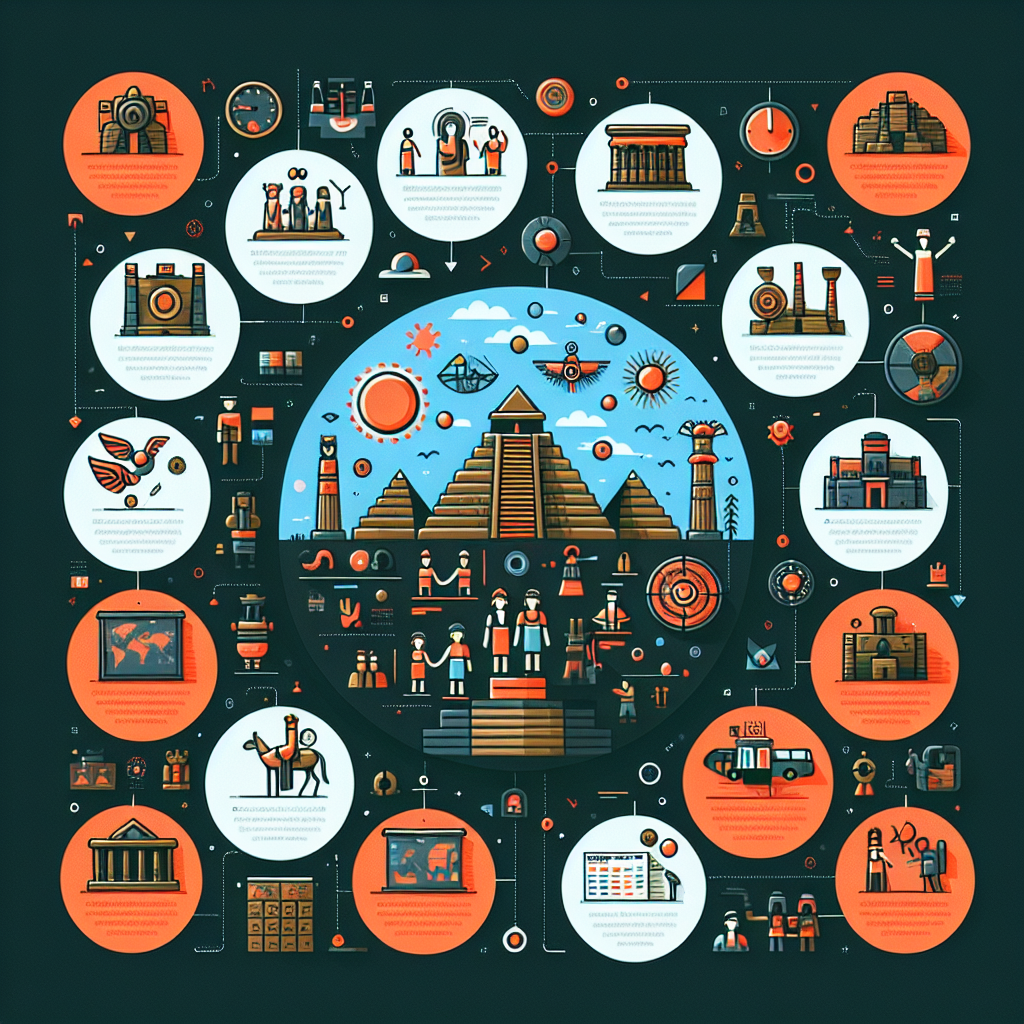
The Great Pyramid of Giza was the tallest man-made structure in the world for over 3,800 years until the Lincoln Cathedral was built in 1311 AD.
The city of Rome has a history that spans over 2,500 years, making it one of the oldest continuously occupied cities in Europe.
The ancient Sumerians in Mesopotamia are credited with inventing the first form of writing, called cuneiform, around 3200 BC.
Cleopatra VII of Egypt was not ethnically Egyptian; she was a descendant of Ptolemy I, a Greek general under Alexander the Great.
The earliest known form of democracy was established in Athens around 508 BC, allowing male citizens to vote on legislation and executive bills.
The ancient Indus Valley Civilization, which thrived around 2500 BC, had advanced urban planning, including grid layouts and sophisticated drainage systems.
Hannibal famously crossed the Alps with war elephants to attack Rome during the Second Punic War around 218 BC.
The oldest known recipe, dating back to around 1750 BC, is a set of instructions for brewing beer found on an ancient Sumerian cuneiform tablet.
Contrary to popular belief, the Great Wall of China is not visible from the moon with the naked eye.
Interesting Facts About Money and Economics
Fact · 9 facts — swipe through each one · Apr 4, 9:28 AM

The word 'salary' originates from the Latin word 'salarium,' which refers to the payments made to Roman soldiers for the purchase of salt.
The largest denomination of currency ever issued by the U.S. was the $100,000 bill, featuring Woodrow Wilson, used only for transactions between Federal Reserve Banks.
In 1946, Hungary experienced the highest inflation ever recorded, peaking at 41.9 quadrillion percent daily.
There are more than 1.7 billion adults worldwide who do not have access to a traditional bank account, according to the World Bank.
The term 'bankrupt' comes from the Italian words 'banca rotta,' which means 'broken bench,' referring to the practice of breaking a moneylender's bench to signify insolvency.
The first paper money was created in China over 1,000 years ago during the Tang Dynasty.
Stockholm, Sweden, is where the world's oldest central bank, Sveriges Riksbank, was established in 1668.
The United States Secret Service was originally founded in 1865 to combat the counterfeiting of U.S. currency.
Zimbabwe once printed a one hundred trillion dollar bill due to hyperinflation in 2008, making it one of the highest denominations of currency ever issued.
Whispers of the Forgotten Manor
Story · 3 min read · Apr 4, 4:44 AM
The leaves of Sycamore Manor rustled with secrets as Thomas and Elara stepped through the grand iron gates, hand in hand. The setting sun cast a golden glow across the ivy-clad walls, and somewhere in the distance, a lark sang its evening song. The manor had been in Elara's family for generations, a majestic edifice filled with forgotten history and whispered tales. Yet, she never imagined that she would inherit it under such mysterious circumstances. "I received the letter just last week," Elara explained, her voice a mixture of wonder and trepidation. "It said the manor was mine." Thomas squeezed her hand reassuringly. "Maybe the manor is trying to tell you something," he said with a soft smile. The couple had always shared a love for uncovering forgotten stories, and this seemed like the perfect adventure. As they crossed the threshold, the air inside shimmered with a peculiar warmth that belied the chill of its empty halls. Dust motes floated like tiny planets in the fading light, and the wooden floors groaned softly underfoot. They found the study, a room lined with towering bookshelves that seemed to watch them with knowing eyes. Elara moved towards a large, oak desk, her fingers brushing against its ancient surface. "I've heard so many stories about this place," she murmured. "But I never thought I'd be here, unraveling its history myself." Thomas chuckled, "Maybe you'll uncover a hidden treasure or a secret passage." Suddenly, the chandelier above them flickered to life, casting an ethereal glow that danced across the room. A soft whisper echoed through the walls, a voice neither could quite place yet felt oddly familiar. "Welcome home," it seemed to say. Elara turned to Thomas, her eyes wide. "Did you hear that?" He nodded, more curious than afraid. "Let's explore," he suggested, leading her through corridors that weaved like a labyrinth. They found themselves in the ballroom, its grandeur diminished only slightly by time. Moonlight streamed through the tall windows, painting silvery patterns on the marble floor. In the center stood an ornate mirror, its surface rippling like the surface of a pond. Elara stepped closer, drawn to its captivating depths. As she peered into the mirror, an image began to form—the reflection of a couple dancing to a melody only they could hear. The couple, beautifully dressed in period attire, moved with a grace that defied time. "Is that... us?" Thomas murmured, stepping beside her. The realization settled over them like a gentle fog. The couple in the mirror were indeed Thomas and Elara, their ethereal forms intertwined in an eternal waltz. A sense of peace enveloped them, and they understood that the manor held more than just bricks and stone; it held a love that transcended the boundaries of time and life itself. "We've always been here," Elara said, her voice filled with wonder. Thomas nodded, his eyes softening as he took her hand once more. "Our story was written long ago, in the heart of Sycamore Manor." As they danced in the moonlit ballroom, the manor embraced them in its eternal memory. The inheritance, they realized, was not of wealth or land, but of an everlasting love that echoed through the halls and whispered through the leaves of the ancient sycamores.