

Snippix logoShort reads. Big curiosity.
Back to feed

#numbers

13 snips

💡

Surprising Facts About Money and Economics

Fact · 9 facts — swipe through each one · May 30, 1:42 PM

Fact
Surprising Facts About Money and Economics
1

The first paper money was created in China during the Tang Dynasty in the 7th century.

🔎
2

The U.S. Bureau of Engraving and Printing produces more than 3 billion $1 bills each year.

🔎
3

In Canada's currency, the $2 coin, affectionately known as the 'toonie,' features a polar bear on one side.

🔎
4

The largest denomination of U.S. currency ever printed was the $100,000 bill, which was used only for transactions between Federal Reserve Banks.

🔎
5

More than 90% of the world's currency exists only on computers and not in physical form.

🔎
6

Vending machines in Japan sell everything from socks to umbrellas, contributing to a more than $60 billion industry.

🔎
7

In Zimbabwe, hyperinflation led to the printing of a $100 trillion note, which later became a collector's item when the currency was abandoned.

🔎
8

The word 'salary' comes from the Latin word 'salarium,' which means payment in salt, a valuable commodity in ancient times.

🔎
9

Monopoly, the world's most popular board game about real estate and finance, has been translated into 37 languages.

← swipe through all 9
Open
🧩

Can you solve this?

Riddle · tap to reveal · May 24, 12:07 PM

Riddle

I am a sequence that starts with one, And grows to double when fun is done. Skip the three and four, continue as such, What number am I when you count too much?

?Tap to reveal the answer

The Answer

The number is 8.

Here's why: The sequence is 1, 2, 5, 6, 7, and then doubles to 8, skipping 3 and 4, following an unusual counting pattern.

Tap to flip back

Open
🧩

Can you solve this?

Riddle · tap to reveal · Apr 29, 12:28 PM

Riddle

I grow by shrinking, can count without an abacus, and measure what lies beneath. What am I?

?Tap to reveal the answer

The Answer

A ruler.

Here's why: a ruler grows in its measurement by the scale marked on it, counts inches or centimeters without needing an abacus, and measures distances and objects.

Tap to flip back

Open
🧩

Can you solve this?

Riddle · tap to reveal · Apr 29, 10:45 AM

Riddle

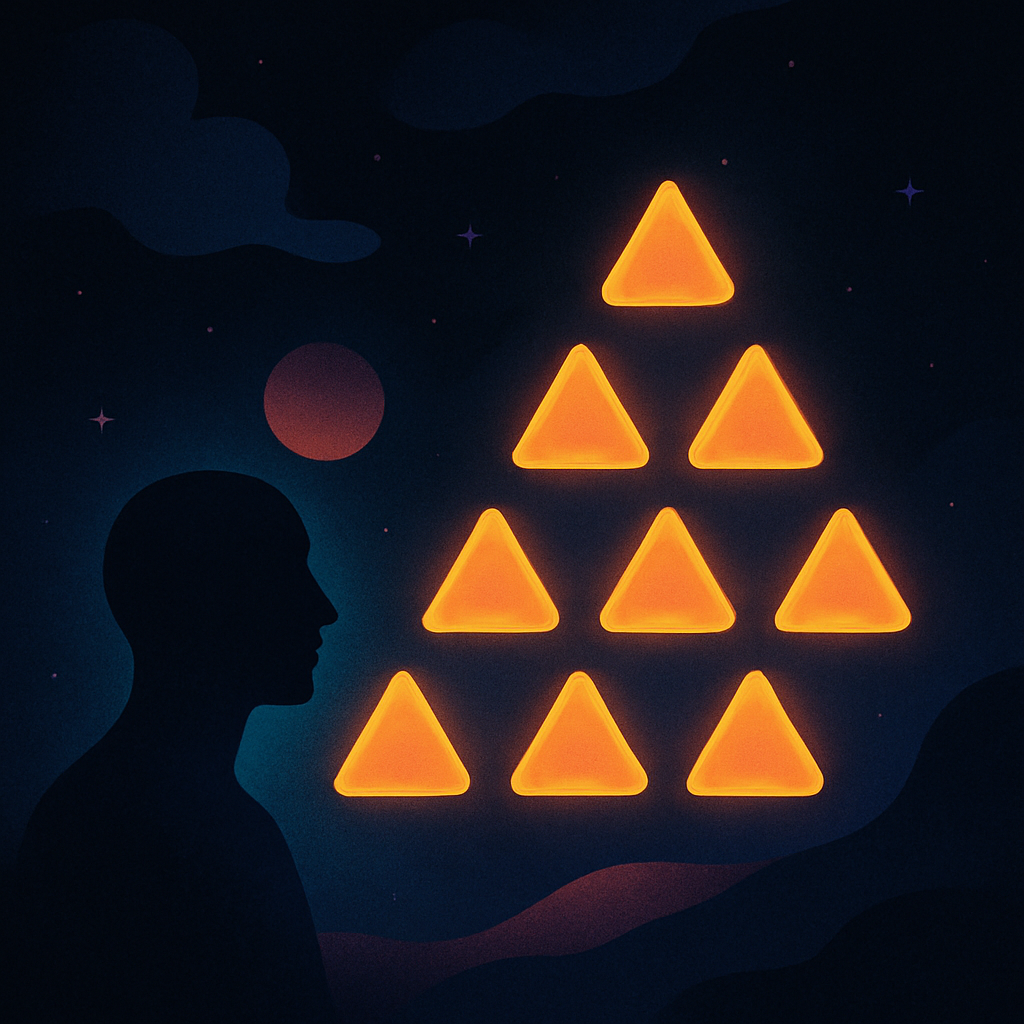
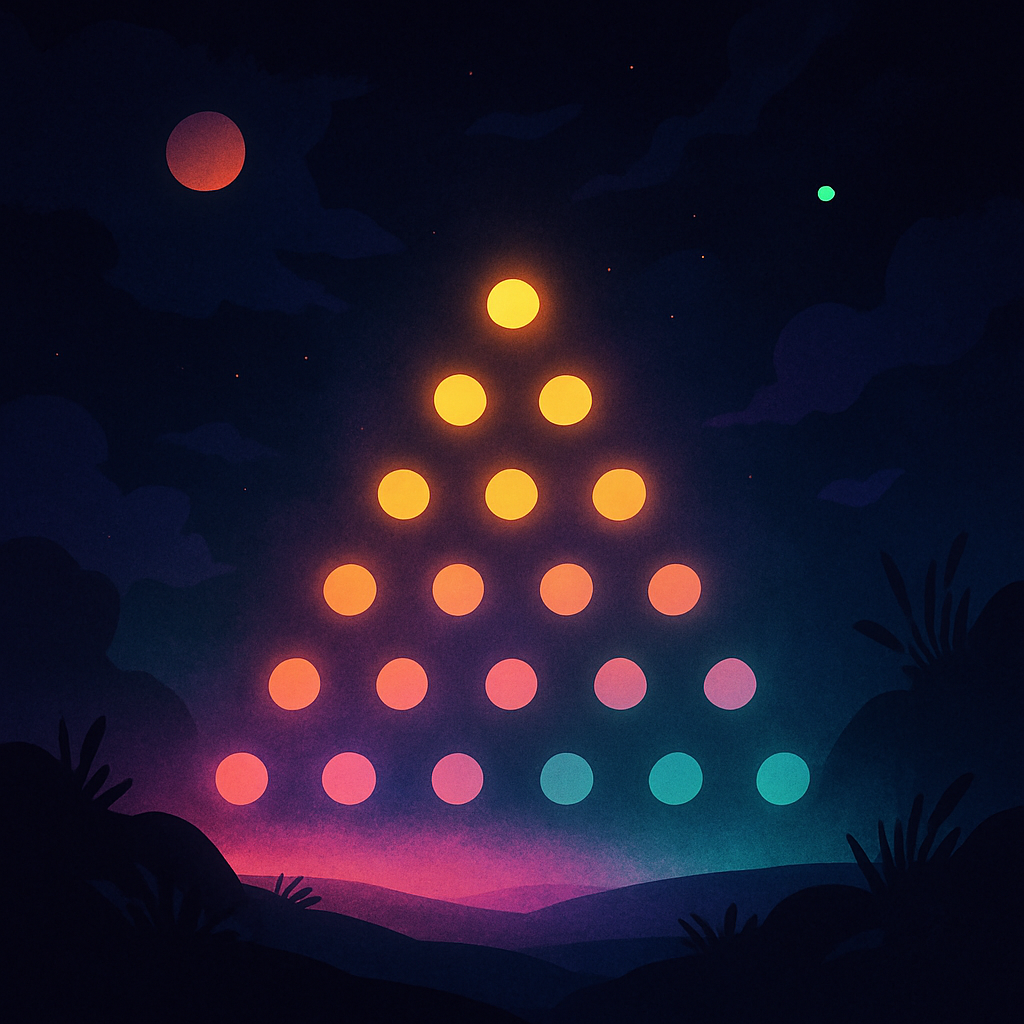
I am a sequence that starts with one, then three, then six, and ends at last. What number am I known as?

?Tap to reveal the answer

The Answer

The triangular number sequence.

Here's why: the sequence describes triangular numbers, which are formed by adding natural numbers sequentially: 1, 3, 6, 10, etc.

Tap to flip back

Open
🧩

Can you solve this?

Riddle · tap to reveal · Apr 28, 3:38 PM

Riddle

What has a thousand pounds but never feels a thing?

?Tap to reveal the answer

The Answer

A scale.

Here's why: A scale measures weight in pounds but doesn't physically feel the weight it's measuring, playing on the dual meaning of 'pounds'.

Tap to flip back

Open
🧩

Can you solve this?

Riddle · tap to reveal · Apr 28, 5:47 AM

Riddle

I start with one and grow with time, Double me now and a pattern you'll find. What am I?

?Tap to reveal the answer

The Answer

The Fibonacci sequence

Here's why: The Fibonacci sequence starts with one and each subsequent number is the sum of the two preceding ones, doubling the pattern over time.

Tap to flip back

Open
🧩

Can you solve this?

Riddle · tap to reveal · Apr 11, 6:06 AM

Riddle

I start with one, then two appear. Multiply the past, and the next is clear. Divide me down, you'll find the sum. What number am I, when all are done?

?Tap to reveal the answer

The Answer

Eight

The sequence 1, 2, 4, 8 follows: start with 1, double each to get the next. Then dividing the 8 by itself and adding gives the sum of 1, which was the start.

Tap to flip back

Open
💡

Surprising Facts About Numbers and Statistics

Fact · 7 facts — swipe through each one · Apr 10, 10:37 AM
Fact
Surprising Facts About Numbers and Statistics
1

A 'jiffy' is an actual unit of time in physics, defined as the time it takes light to travel one centimeter in a vacuum, approximately 33.3564 picoseconds.

🔎
2

The number zero was first used in India in the 5th century and is a key element in modern mathematics, enabling calculations and the concept of infinity.

🔎
3

There are more possible iterations of a game of chess than there are atoms in the known universe, with estimates putting the number at around 10^120.

🔎
4

In a group of just 23 people, there is a 50% chance that two people share the same birthday, according to the Birthday Paradox.

🔎
5

The Fibonacci sequence is closely related to the golden ratio, and both can be observed in natural patterns such as the arrangement of leaves on a stem.

🔎
6

An octillion, equal to 1 followed by 27 zeros, is a number so large that it's difficult to represent in physical terms, yet it's used in scientific calculations.

🔎
7

Pi (π) is an irrational number, meaning it cannot be expressed as a simple fraction, and its decimal representation never repeats or ends.

← swipe through all 7
Open
🧩

Can you solve this?

Riddle · tap to reveal · Apr 9, 12:07 AM

Riddle

I am a number that’s not too high, if you halve me, I’m a whole guy. If you double me up, I’m a perfect score, what number am I, can you explore?

?Tap to reveal the answer

The Answer

10

10 halved is 5 — a perfectly whole number. 10 doubled is 20, and 20/20 is the classic "perfect score" in an eye test. Both clues point squarely at 10.

Tap to flip back

Open
🧩

Can you solve this?

Riddle · tap to reveal · Apr 8, 12:59 AM

Riddle

I am a number that appears to strut, When doubled, I feel tight, Shift me a step, and I become less, Reveal me, and I'm right. What am I?

?Tap to reveal the answer

The Answer

The number 9. (Struts as a '9', doubles to '18' feeling 'tight' due to the even number. Shift one step down to '8' makes it less, revealing as 'nine' fits the phrase.)

The answer is 9. Nine "struts" because it looks tall and confident as a digit; doubled to 18, the digits sum back to 9 (1+8=9), a trick unique to multiples of 9. Shifting one step down gives 8, which is less — and "nine" is revealed as right.

Tap to flip back

Open
🧩

Can you solve this?

Riddle · tap to reveal · Apr 7, 4:22 AM

Riddle

I dance between odd and even, a curious sight to see. Start with one and add on twice, you'll surely notice me. What am I?

?Tap to reveal the answer

The Answer

The Fibonacci sequence

The Fibonacci sequence alternates in a pattern — odd, odd, even, repeating — and starts with 1, then 1 again ("add on twice"). Each number is the sum of the previous two, creating a sequence that perpetually dances between odd and even values.

Tap to flip back

Open
🧩

Can you solve this?

Riddle · tap to reveal · Apr 4, 6:26 PM

Riddle

I am the product of three consecutive numbers, and one of my factors is the same as the sum of my digits. Subtract the smallest of the trio from me, and I'm divisible by three. What am I?

?Tap to reveal the answer

The Answer

The number is 120 (4 * 5 * 6).

4 × 5 × 6 = 120. The digits of 120 sum to 3 (1+2+0), and 3 divides evenly into 120 — so one of its factors equals the sum of its digits. The three consecutive numbers 4, 5, and 6 are the key to unlocking it.

Tap to flip back

🧩

Can you solve this?

Riddle · tap to reveal · Apr 4, 4:45 AM

Riddle

I am a number, not too small, if you divide me by myself, no change at all. If you add my digits, you'll find the same, as multiplying them, in this math game. What number am I?

?Tap to reveal the answer

The Answer

2

The number 2 divided by itself equals 1 — a clean, unchanged whole. More cleverly, adding its single digit (2) gives the same result as multiplying it (also 2), a property that holds true uniquely for 2.

Tap to flip back